Summer Leadership Program
Applications are NOW OPEN for 2026 Summer Leadership Program
The UNA-San Francisco Summer Leadership Program will provide opportunities to engage in high-level decision making, strategic planning, capacity building, and operational support across all UNA-San Francisco Board Committees; including Communications, Programs, Advocacy, Development, Executive, and the Board of Directors.
The UNA-San Francisco Summer Leadership Program is open to high school students who are UNA-USA members. GenUN membership is free to youth 14 - 17 years old. Join today at https://unausa.org/join/membership/ and select San Francisco as your local Chapter.
The 2026 Summer Leadership Program will run from June 15th - July 31st. The summer leadership program fellows will meet on Tuesday and Thursday from 10 am - 3 pm (with a break for brown-bag lunch) at the UNA San Francisco offices in the SF War Memorial Veterans Building, as well as some evening events from 5 - 9 pm for UNA San Francisco Board meetings and Charter programs. Participants of the summer leadership program will be expected to complete a written proposal and present to the Board of Directors demonstrating their executive leadership skills, and a blog post on their experiences in the program.
Summer Leadership Program Applications will be reviewed by the Youth Committee with an interview by the Executive Board members. Final selection of the summer leadership fellows will be made by the Board of Directors and announcements of the selected candidates will be emailed on May 20th. All selected summer leadership candidates and their parent/guardians will be expected to complete a signed memorandum of understanding before June 1st.
The outcome of the program will include a Certificate of Completion for your service to the United Nations Association of San Francisco, mentorship, networking and hands-on experience in various UNA leadership modalities.
If you are interested, please complete the 2026 Application Form and email your resume or CV to president@una-sf.org.
2025 Summer Leadership Program
Please join me in recognizing Sarina Banker, Andrew Martinovsky, and Crystal Huang for their contributions and engagement with the UNA San Francisco 2025 Summer Leadership Program.
UNA-San Francisco launched this leadership development opportunity for our GenUN members (14-17 years old) to engage in community outreach, program development, and events in honor of the 80th Anniversary of the UN Charter and the Pact for the Future.
This past summer the student leadership fellows gained hands-on experience through mentored UNA-SF activities across all UNA-SF Committees, including:
- Advocacy: advocating for restored funding of the SF Human Trafficking Hotline;
- Program: participating in development training with targeted outreach for the screening of The Quiet Diplomat;
- Communications: developing content for awareness of the Convention on the Rights of the Child and developing a blog post on their experiences;
- Executive: leadership training with learning how to draft and present a proposal to the Board of Directors under Roberts Rules of Order.
Read more about this experience from our 2025 Summer Leadership Fellow below:
Finding My Voice in Advocacy: A Journey Through Posters, Speeches, and Teamwork By Crystal Huang
Over the past few months, I’ve stepped into projects that stretched me in ways I never expected. From making posters about human rights to giving a one-minute speech in front of the San Francisco Board of Supervisors, I’ve learned that advocacy comes in many forms. Sometimes it’s quiet, like creating art that speaks for itself. Sometimes it’s bold, like standing at a podium with only sixty seconds to make an impact. And every time, it has helped me grow.
Talking to Strangers at City Hall
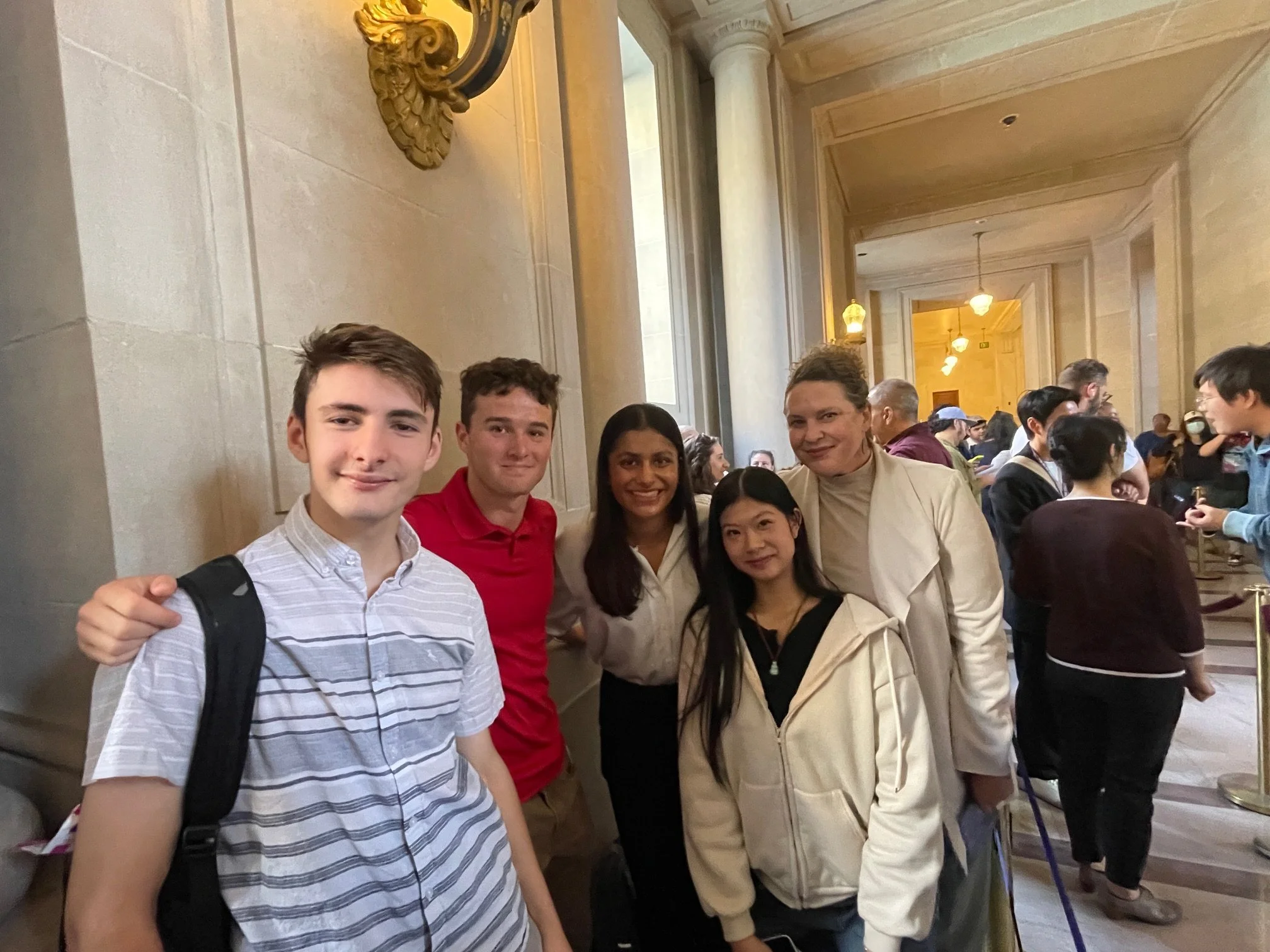
On the first day of the program, I had entered completely blind. I wasn’t sure of the agenda or what tasks I would face that day. To my surprise, I was thrown right into action. My first task was to do outreach at City Hall, encouraging people to attend our screening of The Quiet Diplomat held at the Veterans War Memorial. For me, walking up to people in such a formal space was nerve-wracking. How do you get someone’s attention without being pushy? How do you explain an event quickly but convincingly? Each conversation was like its own mini-test. However, as I talked to more people, I noticed I became more relaxed. The words came to my mind more smoothly. I was stuttering less and creating a more genuine environment for both myself and the individual.
This was one of the most anxious tasks I had ever done. Though I have done personal outreach before, I never realized just how little experience I had. What I did realize though, was this experience greatly decreased my fear of talking to strangers. After this experience, I became more comfortable presenting myself to others and talking with confidence–even if I didn’t feel like it internally. More importantly, I learned that outreach doesn’t only rely on technological communication, such as sending emails or posting on social media. Sometimes, you have to put in the extra effort, and personally walk up to people to effectively gain an audience. This experience also set me up for future outreaches, as they say: Practice makes perfect.
One Minute, Big Impact
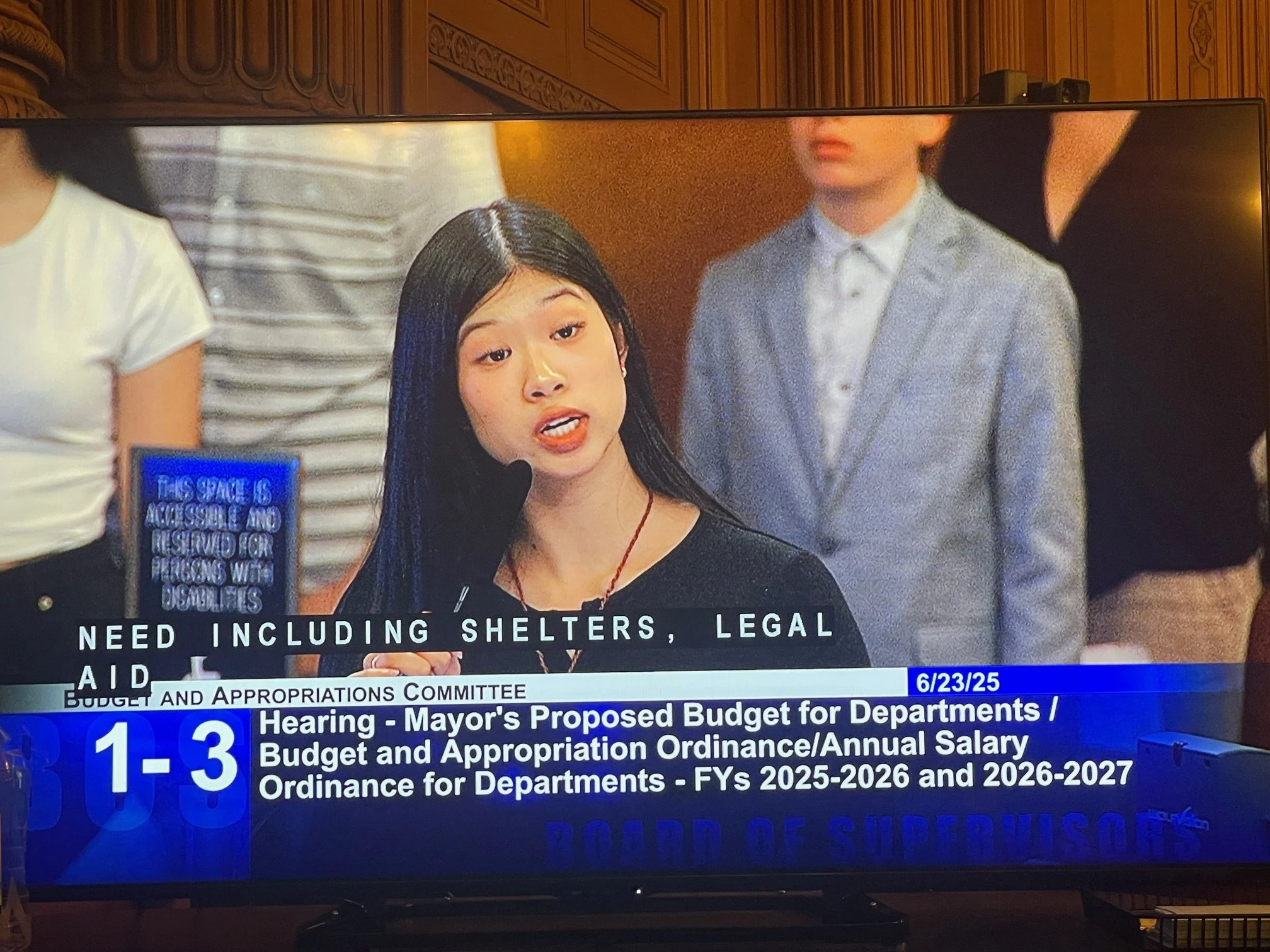
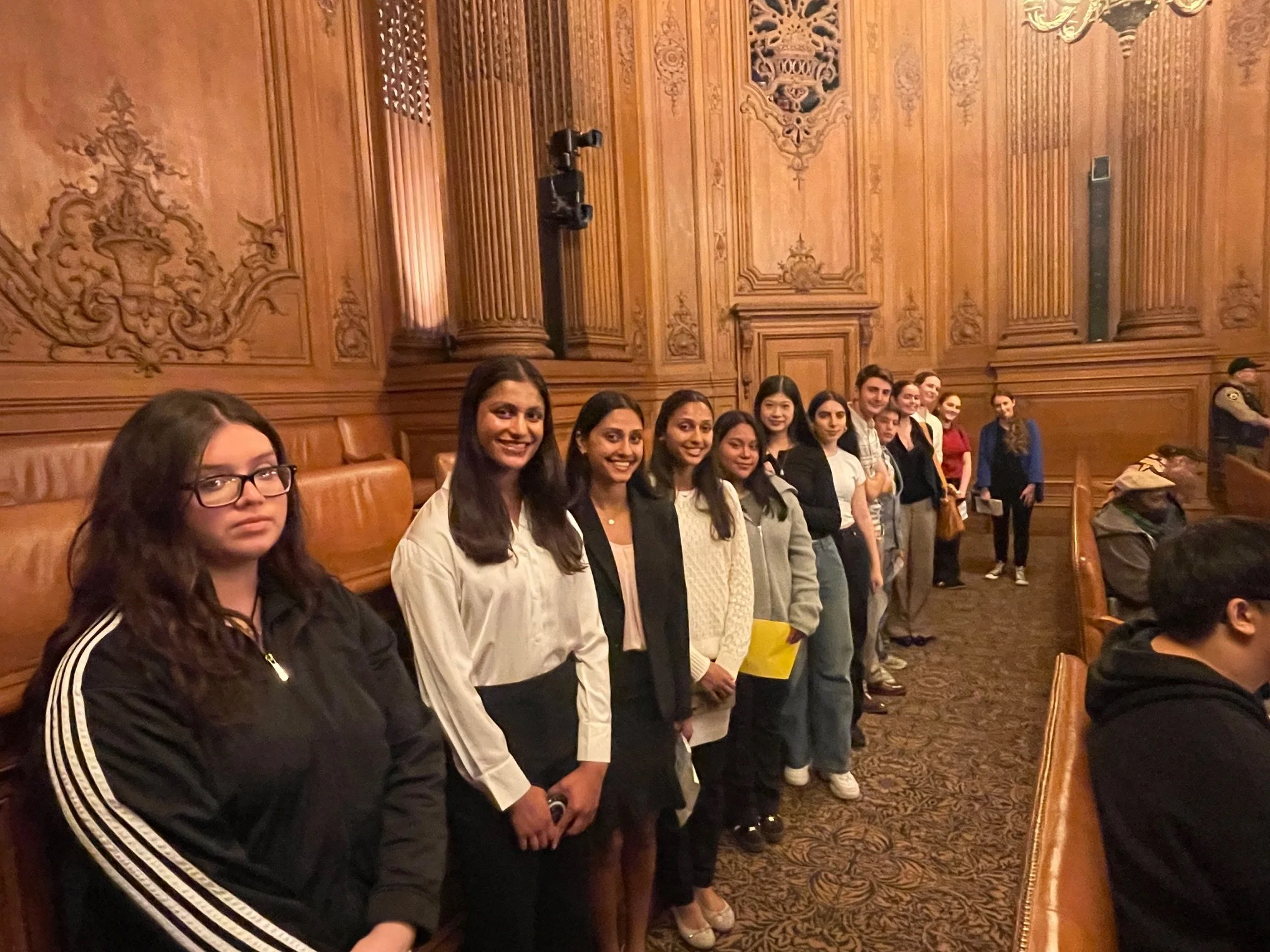
Though I ended up spending a lot of time at City Hall for outreach, we actually had a previous motive prior: speaking in front of the San Francisco Board of Supervisors in support of the San Francisco Collaborative Against Human Trafficking (SFCAHT).
Each speaker had exactly one minute to say whatever they wanted. Sixty seconds to explain why SFCAHT’s work matters and why the city should support it. At first, I thought: How can anyone say anything meaningful in just one minute? To be honest, my original plan was to never speak at all. However, the other youth members of UNA-SF AND SFCAHT were so supportive and passionate, that they convinced me to write a short speech at the last minute. With two hours remaining, I had written, edited, and practiced my one minute speech for the San Francisco Board of Supervisors.
When I finally stepped up to the microphone, my heart was racing. But I remembered that this wasn’t just about me, it was about people whose voices weren’t being heard. That thought gave me the courage to deliver my words clearly and with confidence. And I finally started speaking my first few words of “Good afternoon supervisors”.
It was over in a flash, but the experience left me feeling more confident in my public speaking skills than ever before.
Learning About Human Rights Through Posters
When I joined the young leaders program, I expected a lot of the tasks to be event planning and outreach. Unexpectedly, my art and design skills were put to the test as well. We were tasked to create posters to support the ratification of two important international treaties: the Convention on the Rights of the Child (CRC) and the Convention on the Elimination of All Forms of Discrimination Against Women (CEDAW).
The CRC emphasizes the protection and development of children worldwide, while CEDAW focuses on eliminating discrimination and ensuring equal opportunities for women.
At first glance, making posters sounded simple: Choose a layout and add some words. In reality, it was much more difficult than I thought. Constant new ideas were springing into our heads, and constant changes were being made. Our main goal was to make the posters eye-catching, aesthetically pleasing, but emotionally convincing. Through teamwork and communication, we successfully created two beautiful one-pagers. I left with a deeper understanding of how advocacy and design can intersect with one another.
Building Something From Scratch: The UNA-SF Youth Committee
Another huge learning curve has been working on a proposal to start a Youth Committee for the United Nations Association – San Francisco (UNA-SF). Unlike a one-time event, this project is about creating something sustainable for the future.
I quickly learned that coming up with the idea was the easy part. The real challenge was in the details: What will the committee do? How will we recruit members? How will we make
sure it lasts after the first group of students graduates? I’ve been lucky to receive direct feedback from the UNA-SF president. Sometimes the questions are tough, and the criticism stings a little, but I’ve realized that’s how proposals get stronger. Every suggestion has forced me to think deeper, refine the plan, and anticipate challenges.
This project has been my crash course in leadership, strategy, and communication. Passion matters, but so does organization and the willingness to listen.
Next Stop: The Boardroom
On Tuesday, I had the chance to speak at the UNA-SF Board Meeting. I, alongside my co-chair, presented our long worked on proposal to the Board of UNA-SF. Entering the board meeting, I was nervous, but had hope that our proposal would pass.
To my surprise, the most difficult part wasn’t presenting the proposal itself, but tackling all the detailed questions that followed. Answering difficult questions from adults on the spot was tough. They asked questions I had never even thought of, bringing up true concerns that I didn’t think through. What I have learned from this experience are two things: 1. Listen 2. Compromise. In order to solve any existing issues, you must listen and understand the concerns of your peers. Sometimes all they need is a little bit of clarification or reassurance. In addition, I have found compromise extremely important when it comes to organizing. There rarely is a unanimous agreement on something, so the best way to create majority approval is through compromise. Sometimes letting small things go can create a huge impact overall. As the questions and discussions continued, me and my co-chair were editing and changing our proposals mid meeting. This just goes to show how detailed and complex executive leadership truly is, it never stops changing and evolving.
Reflections on Growth
Looking back at these experiences–making posters, organizing events, and giving speeches–I see a clear progression in my personal and professional growth.
I’ve deepened my understanding on human rights, especially women’s and children’s rights, and learned how art and advocacy can go hand in hand.
I’ve improved my communication, public speaking, and leadership skills, while also learning practical organization and outreach strategies.
I also greatly improved my confidence in advocacy. Each project has pushed me to step outside of my comfort zone, whether by speaking in front of well established adults, reaching out to strangers, or presenting proposals to professionals.
Most importantly, I’ve realized that advocacy is not just about passion; it’s about persistence, preparation, and partnership. Whether through art, speeches, or planning, every action plays a role in making change.